Modal Jazz
Late-1950s jazz that traded fast chord changes for long stretches on a single mode, opening space for melody.
What it sounds like
Modal jazz uses modes — Dorian, Phrygian, Lydian, Mixolydian — as the basic harmonic unit instead of the dense ii-V-I chord chains of bebop. A typical tune sits on one mode for eight or sixteen bars before shifting, which lets soloists develop ideas across longer arcs rather than racing through changes. Tempos cover the full range from ballad to medium swing, but the rhythm section plays open: the pianist comps sparse quartal voicings, the bassist walks more loosely, and the drummer leaves space. Heads are minimal — sometimes just a four-bar motif — so the form is closer to a frame for improvisation than a song. Tones tend to be cooler and the dynamics more controlled than in hard bop.
How it came about
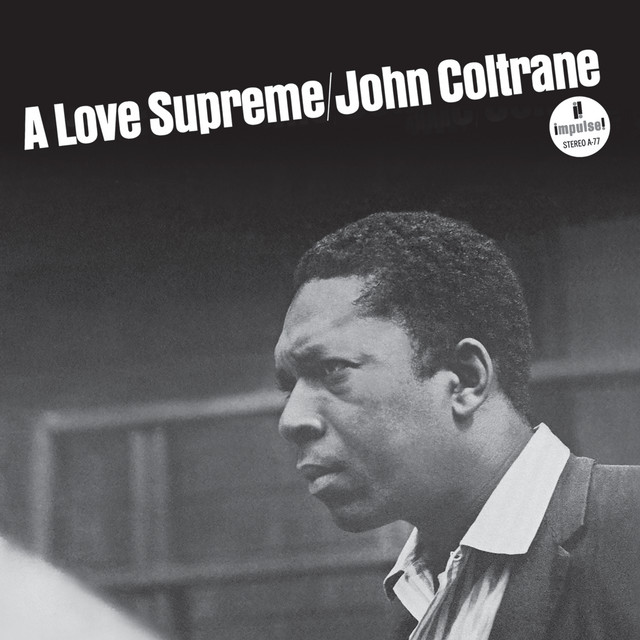
George Russell's 1953 treatise Lydian Chromatic Concept of Tonal Organization laid out the theoretical case for thinking in modes rather than functional harmony, and Miles Davis put the idea on record with Milestones (1958) and Kind of Blue (1959). John Coltrane took the approach further on My Favorite Things (1961) and the marathon modal explorations of A Love Supreme (1965). Bill Evans, Herbie Hancock, McCoy Tyner and Wayne Shorter all built bodies of work around modal frameworks. The style became the default jazz language of the 1960s and fed directly into the spiritual jazz and post-bop of the next decade.
What to listen for
Notice how the chord rarely changes — on the Kind of Blue track So What, the band sits on D Dorian for sixteen bars before shifting up a half step. Listen for quartal voicings on the piano (chords built in fourths rather than thirds), which give the harmony its open, unresolved feeling. Solos build patiently: Coltrane in particular constructs a long argument over thirty or more choruses on a single mode.
If you only hear one thing
Miles Davis's Kind of Blue (1959) is the consensus starting point and remains the bestselling jazz album of all time. For the harder edge, Coltrane's A Love Supreme (1965) is the canonical modal extension into spiritual jazz.
Trivia
Kind of Blue was recorded in two sessions across nine hours total at Columbia's 30th Street Studio, with most tracks captured in a single take and the band reading the modal sketches for the first time on tape.
Notable artists
- John Coltrane
- Bill Evans
- Herbie Hancock
Notable tracks
- Miles Davis — Kind of Blue — Flamenco Sketches (1959)
- Bill Evans — Peace Piece (1959)
- John Coltrane — Impressions (1963)
- Herbie Hancock — Maiden Voyage (1965)
- John Coltrane — A Love Supreme (1965)