Drone Music
Long-form sustained-tone music built on just intonation and slow overtone movement — pieces often run hours, not minutes.
What it sounds like
Drone music is built from sustained tones — pitches held without articulation while their overtones slowly beat against each other. Composers tune the underlying intervals in just intonation rather than equal temperament, so two notes a perfect fifth apart produce a clean stack of partials that move in audible patterns. There's typically no melody, no rhythm, and very little timbral change at the surface; what changes is the relationship between overtones as the listener's ear adjusts. Pieces can last anywhere from twenty minutes to a full day. Performance contexts often include darkened rooms, low lighting, and seated audiences who treat the piece more like an installation than a concert.
How it came about
The recognized origin is the early-1960s New York scene around La Monte Young, who began performing sustained-tone pieces with the Theatre of Eternal Music ensemble starting in 1962. Tony Conrad, John Cale, and Marian Zazeela were part of that core group. Young's 'The Well-Tuned Piano' (begun 1964) and 'Composition 1960 #7' (a B and an F-sharp 'to be held for a long time') are foundational documents. Parallel European developments included Éliane Radigue's analog-synthesizer drone work in Paris from the 1970s onward, and Phill Niblock's tape and ensemble pieces in New York. The Theatre of Eternal Music had direct lines into the early Velvet Underground via Cale.
What to listen for
For the first several minutes nothing seems to happen — that response is correct and is part of the form. The actual movement is in the overtones: as your ear settles, you'll begin to hear pulsing beats between adjacent partials, and pitches that weren't 'played' will start to emerge from the interaction. Volume matters more than usual: drone pieces are designed to be played at conversational level so the room's acoustics participate. Headphones change the experience entirely — many drone works are intended for spatial diffusion, not stereo.
If you only hear one thing
La Monte Young's 'The Well-Tuned Piano' (the 1981 Gramavision recording is the standard reference, around five hours long) is the canonical text. For a shorter entry, Éliane Radigue's 'Trilogie de la Mort' (1998) is a three-part work for ARP 2500 that compresses the form into roughly three hours.
Trivia
Young keeps 'The Well-Tuned Piano' in a state of continuous revision — each performance is tuned slightly differently and uses the room's acoustics, so two recordings of 'the same piece' can run hours apart in length and never share an identical chord.
Notable artists
- Phill Niblock
- Éliane Radigue
- Earth
- Sunn O)))
- Lawrence English
- Kali Malone
Notable tracks
- Éliane Radigue — Adnos I-III (1980)
- Phill Niblock — Five More String Quartets (2005)
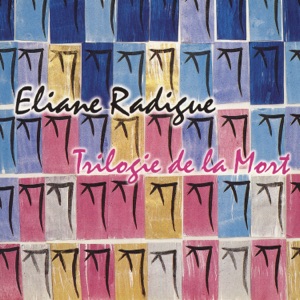 Éliane Radigue — Trilogie de la Mort (1998)
Later notable tracks
- Sunn O))) — Between Sleipnir's Breaths (2019)
- Kali Malone — The Sacrificial Code (2019)
- Éliane Radigue — Occam I (2017)
- Lawrence English — A Mirror Holds the Sky (2019)