
Free Improvisation
1960s European-rooted improvised music: no chord changes, no fixed metre, structure made in real time from the players' reactions.
What it sounds like
Free improvisation abandons the harmonic and rhythmic scaffolding of jazz and classical music. There is no set tune, no bar count, often no shared key — players generate material in real time, listening and reacting, with silence as much a part of the language as sound. Extended techniques (key clicks on a saxophone, scraping a guitar string with a metal object, breath without tone) are standard vocabulary rather than novelties. Performances typically run 30-60 minutes and treat the room itself as part of the instrument: the same trio in a small Soho basement and a large European church will produce very different music.
How it came about
Free improvisation grew out of the late-1960s European response to American free jazz (Ornette Coleman, Cecil Taylor, Albert Ayler), with Britain as a central hub. Guitarist Derek Bailey, saxophonist Evan Parker, and percussionist Tony Oxley founded Incus Records in 1970 to document the scene. The collective AMM, formed in 1965 in London with Eddie Prevost, Keith Rowe, and Lou Gare, took a more abstract, less-jazz-derived path. German players Peter Brotzmann (saxophone) and Han Bennink (percussion) built parallel scenes in Wuppertal and Amsterdam, and the Japanese improvising scene around Kaoru Abe and later Otomo Yoshihide connected through the 1980s.
What to listen for
Don't track melody. Track event density and timing — who plays first after a silence, how long the pause is, who answers. Free improvisation rewards a focus on small details: the breath inside a saxophone note, the difference between a string scraped with a bow and one scraped with a piece of metal. Album recordings flatten the dynamic range; live recordings preserve more of the room.
If you only hear one thing
AMM, 'AMMMusic' (1966) for the British anti-idiomatic anchor. Derek Bailey solo, 'Aida' (1980) for the guitar language. Evan Parker, 'The Topography of the Lungs' (1970, with Bailey and Han Bennink) for the trio context.
Trivia
Derek Bailey's book 'Improvisation: Its Nature and Practice in Music' (1980) is the closest thing the field has to a manifesto, and it argues against treating free improvisation as a genre at all — Bailey preferred 'non-idiomatic improvisation' as a label.
Notable artists
- Derek Bailey
- AMM
- Evan Parker
- Burkhard Beins
Notable tracks
- Evan Parker — Topography of the Lungs (1970)
- Derek Bailey — Aida (1980)
- Derek Bailey — Improvisation (1980)
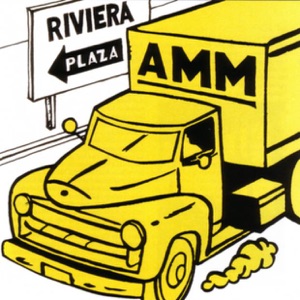 AMM — AMMMusic (1968)
- Evan Parker — Six Of One, Half-Dozen Of The Other (1980)