
Dub
1970年代のジャマイカで成立した、レゲエのリズムトラックをエフェクトで再構築する音楽。
What it sounds like
レゲエの一曲をミキシング卓の上で組み立て直し、歌をほぼ消して、スタジオそのものを楽器のように扱う音楽。ベースとドラムを主役に据える(レゲエ特有のもたつくリズムで、奏者は「ワンドロップ」「ロッカーズ」と呼ぶ)。その音にリバーブ(残響)とディレイ(やまびこのように音を返す効果)をたっぷりかける。ヴォーカルやギターは突然出現して突然消える。BPMは70〜90のゆったり。演奏を録音したあとの「音をいじる作業」そのものが曲づくりになる。鳴っている音そのものと同じくらい、音と音のあいだの「間(ま)」や響きが核心になる──それがダブだ。
The signature rhythm pattern of this genre. Press play to loop it, and follow the score below to see which beat is sounding.
How it came about
もとは、ヴォーカルを抜いた「楽器バージョン(version)」をレゲエの45回転シングルのB面に入れる慣習があった。きっかけは1968年、デューク・リードのスタジオ「Treasure Isle」で、サウンドシステム運営者のルディ・レッドウッドがダブプレートを切らせた際、エンジニアが歌を入れ忘れてできた偶然の盤だとされる。このヴォーカル抜きの「バージョン」が、DJがマイクで即興にしゃべりや掛け声を乗せる「トースティング(toasting)」の土台にもなり、同時にミキシングそのものを再構築する芸術=ダブをも生んだ。ジャマイカのキング・タビー(本名オズボーン・ラドック)はミキシング卓での再構築を芸術にまで高め、プロデューサーのリー・ペリーも同時期に独自のダブを築いた。1973〜78年に『King Tubby Meets Rockers Uptown』(1976)やペリー『Super Ape』(1976)といった名盤が生まれる。やがて後世に受け継がれたのは、どれか一枚の名盤そのものよりも、スタジオを楽器として演奏する発想と「間」の使い方だった。1970年代後半に英国へ渡ってポストパンクの音作りに影響を与え、1980年代以降はブリストルのトリップホップへ流れ込んだ。その空間処理の発想は、テクノやダブステップなど現在のダンス・ミュージックのミキシングにまで及ぶ。
What to listen for
音が突然消えて、エコーだけが残る瞬間(「dub spaces」)。ベースとドラムだけになった時の空間の広さ。演奏中に音量つまみ(フェーダー)が操作され、各楽器が急に大きくなったり消えたりするのが聴き取れる。キング・タビーは卓に組み込まれたフィルター(高い音や低い音を削る装置)の大きなつまみを演奏のように操作し、低音を一気に抜いては戻した──いまのDJがフィルターのつまみを回す手つきの先駆けだ。同じ曲の「ボーカル・バージョン」と「ダブ・バージョン」を続けて聴くと、何が変わったかが分かりやすい。
If you only hear one thing
1枚だけ聴くなら King Tubby & Augustus Pablo『King Tubby Meets Rockers Uptown』(1976)──ダブが何をする音楽かが30秒で分かる教科書だ。リー・ペリー『Super Ape』(1976)は、より混沌としてサイケデリックな一枚。日本のものなら、ダブの空間感覚を日本のポップ/ロックに溶かし込んだ名盤、フィッシュマンズ『LONG SEASON』(1996)がいい。
Trivia
「Dub」という名は、スタジオで作るアセテート盤(1点物の試聴盤)を「ダブ・プレート(dub plate)」と呼んだことに由来するとされる(諸説ある)。リー・ペリーは自身のスタジオ「Black Ark」が最終的に焼失し、廃業した。ペリー本人が火をつけたという説が広く語られ、理由を「悪霊が住み着いたから」と説明したこともある(出火の経緯は定かでない)。
Notable artists
- Lee "Scratch" Perry
- King Tubby
- Augustus Pablo
- Adrian Sherwood
- The Bug
- Sherwood & Pinch
Notable tracks
- King Tubby — King Tubby's Special (1973)
- King Tubby — King Tubby Meets Rockers Uptown (1976)
- Augustus Pablo — King Tubby Meets the Rockers Uptown (Pablo) (1976)
- Lee "Scratch" Perry — Police and Thieves (dub) (1976)
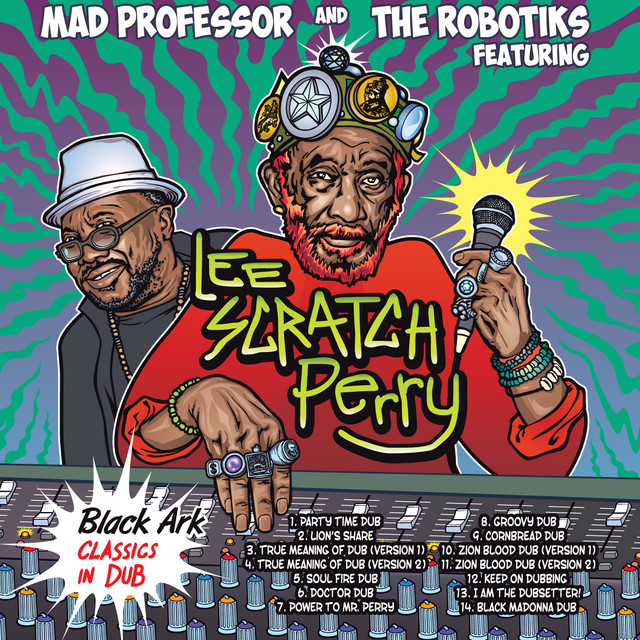
- Lee "Scratch" Perry — Black Ark in Dub (1980)
Later notable tracks
- The Bug — Function (2014)
- Sherwood & Pinch — Man Vs. Sofa (2017)
 Adrian Sherwood — Survival & Resistance (2012)