NZ Indie
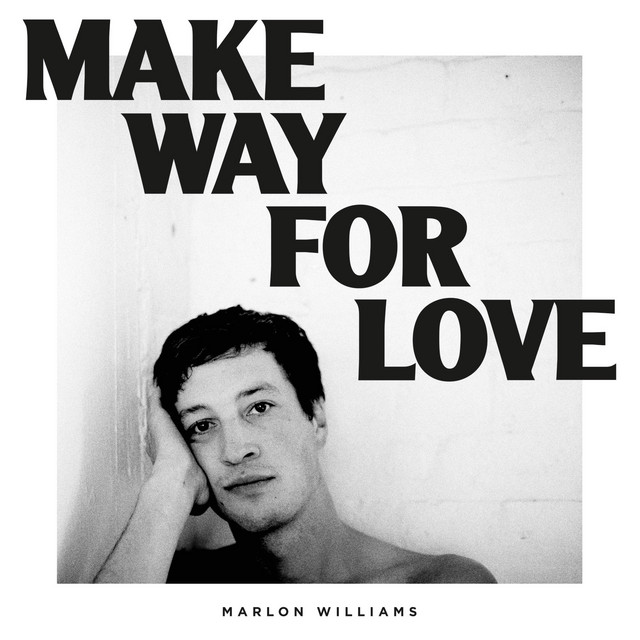
Fat Freddy's Drop, Kimbra, Lorde, Marlon Williams, Benee — the post-2000 New Zealand indie / alt / SSW lineage that reworked the country's global pop footprint.
What it sounds like
NZ indie is the total body of post-2000 alternative music from New Zealand that sits outside the Split Enz / Shihad rock lineage. The centre of the scene is Wellington's Fat Freddy's Drop (a seven-piece dub / soul / jazz / reggae outfit formed 2000), Auckland's The Naked and Famous (synth-pop, 2007), Marlon Williams (country-folk singer-songwriter, 2010s), Lorde (whose 2013 'Royals' hit US number one at age 16), Kimbra (Gotye's duet partner on the biggest song of 2011), and Benee (whose 2019 'Supalonely' hit on TikTok). What ties this heterogeneous group together is a specific self-consciousness: they make sophisticated pop from a small country without borrowing the language of the big-country markets.
How it came about
Fat Freddy's Drop formed in Wellington in 2000 (Toby Laing on trumpet, Chris Faiumu as DJ Fitchie on production, plus five others). Their 2005 album Based on a True Story hit number one in New Zealand and Australia, and their jam-band-style live sets took European festival circuits by storm. The Naked and Famous formed in Auckland in 2007, and their 2010 album Passive Me, Aggressive You with the single 'Young Blood' brought them global. Kimbra (born 1990, Hamilton NZ) released her debut Vows in 2011; the same year, her guest vocal on the Belgian-Australian Gotye's 'Somebody That I Used to Know' won two Grammys. In 2013 Ella Yelich-O'Connor, a 16-year-old from Auckland, released 'Royals' as Lorde, held the US number one for seven weeks, and won the 2014 Grammy for Song of the Year.
What to listen for
On Fat Freddy's Drop's 'Hope' seven players cycle the same bar for ten to fifteen minutes while horns and dub effects drift out of phase — the sensation is of time slowing rather than accumulating. On Lorde's 'Royals' the entire backing is kick, finger-snaps, and one synth pad; that extreme minimalism rewrote the direction of 2010s pop. Marlon Williams' 'Nobody Gets What They Want Anymore' uses a Roy Orbison-style low baritone that sits outside any other contemporary of his generation.
If you only hear one thing
Lorde 'Royals' (2013) for the point at which NZ indie changed global pop. Fat Freddy's Drop 'Hope' (2005) for the extended jam-band side. Marlon Williams 'Nobody Gets What They Want Anymore' (2018), Kimbra 'Settle Down' (2011), Benee 'Supalonely' (2019) — cycle through them for a snapshot of the scene's range.
Trivia
Lorde won her Song of the Year Grammy aged 17 — one of the youngest winners in the award's history. She grew up in middle-class suburban Auckland; her mother Fiona is a published poet, which is reflected in the abstract density of her lyric writing. Marlon Williams is Ngāi Tahu and Ngāti Ruapani (Māori); on screen he appears as a wedding-band singer in Bradley Cooper's A Star Is Born (2018) and in Justin Kurzel's True History of the Kelly Gang (2019). The name Fat Freddy's Drop comes from an incident in which a former member — nicknamed Fat Freddy — passed out drunk at an early gig.
Notable artists
- Fat Freddy's Drop
- The Naked and Famous
- Kimbra
- Lorde
- Marlon Williams
- TEEKS
- Benee
Notable tracks
- Fat Freddy's Drop — Hope (2005)
- Fat Freddy's Drop — Wandering Eye (2005)
- The Naked and Famous — Young Blood (2010)
- Lorde — Royals (2013)
Later notable tracks
- Kimbra — Cameo Lover (2011)
- Kimbra — Settle Down (2011)
- Lorde — Green Light (2017)
- Marlon Williams — Beautiful Dress (2018)
- TEEKS — First Time (2018)
- Benee — Glitter (2019)
- Benee — Supalonely (2019)
- Lorde — Solar Power (2021)
- Marlon Williams — Nobody Gets What They Want Anymore (2018)