
Film Score
Orchestral and hybrid music written to support narrative film — built around leitmotif, mickey-mousing and emotional pacing.
What it sounds like
Film score in the symphonic sense refers to original orchestral music written to accompany narrative film. The standard tools include leitmotifs (recurring themes tied to characters or ideas), mickey-mousing (precise sound-to-image synchronization for action), source music versus underscore (diegetic versus non-diegetic placement) and click tracks (which let the conductor lock the orchestra to the picture). Orchestration spans from full symphony orchestra (eighty to a hundred players) for studio-era and modern blockbuster scores to chamber ensembles, electronic instruments, ethnic instruments and hybrid orchestra-plus-synth setups. Cue length is dictated by edit timing — composers write to a stopwatch.
How it came about
Hollywood's classical-style orchestral score was codified in the 1930s by European emigré composers Max Steiner ('King Kong,' 1933), Erich Wolfgang Korngold ('The Adventures of Robin Hood,' 1938) and Alfred Newman, all working in a late-Romantic Wagnerian-Mahlerian register. Bernard Herrmann's collaborations with Alfred Hitchcock ('Vertigo,' 1958; 'Psycho,' 1960) extended the style toward expressionism. John Williams ('Star Wars,' 1977; 'Schindler's List,' 1993) revived the full-orchestra leitmotif blockbuster score; Ennio Morricone ('The Good, the Bad and the Ugly,' 1966; 'The Mission,' 1986) defined the European parallel tradition. The 2000s saw a hybrid orchestra-and-synth language consolidated by Hans Zimmer's Remote Control Productions and applied across action and superhero film. Japanese cinema produced its own major composers — Toru Takemitsu, Joe Hisaishi.
What to listen for
Track leitmotifs across the film: Williams's 'Star Wars' scores attach specific themes to specific characters and recur them in subtle disguise — minor key, slow tempo, partial reference — to telegraph who the scene is really about. Listen for the difference between underscore (music the characters don't hear) and source music (a radio in the scene); composers route emotional information through that boundary. In Morricone, vocal lines and unusual instruments (harmonica, ocarina, electric guitar) function as character voices.
If you only hear one thing
John Williams's score for 'Star Wars' (1977) is the most-played film score in the modern orchestral repertoire. For the European tradition, Ennio Morricone's 'The Mission' (1986). For the Japanese animation tradition, Joe Hisaishi's score for 'Spirited Away' (2001).
Trivia
Bernard Herrmann's 'Psycho' (1960) used only strings — no winds, brass or percussion — partly as an economy measure on a black-and-white picture, partly as a deliberate tonal restriction. The screeching string chord under the shower scene is one of the most-imitated sounds in cinema history.
Notable artists
- Ennio Morricone
- John Williams
- Hans Zimmer
- Jonny Greenwood
- Mica Levi
Notable tracks
- Jonny Greenwood — There Will Be Blood (Score) (2007)
- Hans Zimmer — Time (2010)
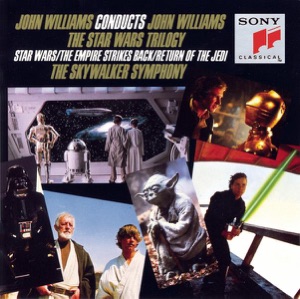 John Williams — Star Wars Main Theme (1977)
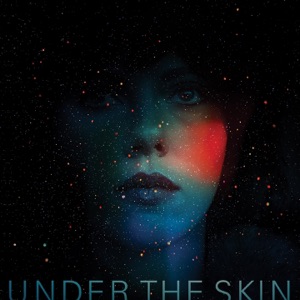 Mica Levi — Under the Skin (Score) (2014)