Sabar
The Wolof hand-and-stick drum ensemble tradition of Senegal — centuries-old, now internationally known through Doudou N'Diaye Rose's orchestration and as the rhythmic foundation of mbalax.
What it sounds like
Sabar is the hand-and-stick drum ensemble tradition carried by the Wolof griot caste (géwël) of Senegal. The drums are single-headed goatskin-topped instruments with distinctive peg-tuning; the ensemble assigns roles — lead nder for melodic solos (bákks), and mbëng-mbëng, gorong, col, and talmbat providing the layered rhythmic bed. Players use a thin stick in one hand and the bare palm of the other. Tempo runs mid-to-fast, meter oscillates between 12/8 and 4/4, and the performance's defining feature is the intentional 'breaking' of the pulse — the lead deliberately drops out of the meter to hand a beat over to a dancer's leap. Weddings, naming ceremonies, and pre-match warm-ups for laamb (Senegalese traditional wrestling) are sabar's core native settings.
How it came about
Sabar was established in Wolof society by roughly the fifteenth century, carried by the professional griot caste that also handled oral history and social mediation. Under Wolof kingship, the drums were struck for ritual, military, and social occasions — royal accessions and battle calls. Colonial rule did not extinguish the tradition, which continued through community weddings and naming ceremonies. In the mid-to-late twentieth century, Doudou N'Diaye Rose (1930–2015) reshaped sabar for the concert-hall stage by orchestrating fifty-to-one-hundred-piece sabar ensembles, releasing the 1994 landmark 'Djabote' on Real World, and touring international festivals. UNESCO named him a Living Human Treasure. Sabar is also the direct rhythmic foundation of mbalax, without which the Youssou N'Dour / Baaba Maal Dakar-pop sound could not exist.
What to listen for
Follow the nder — the lead drum. Its bákks are the melodic solos, alternating between the bare right hand and the left-hand stick in rapid interlocking patterns. Then locate the rhythmic layers underneath: mbëng-mbëng lays down a steady quarter-note bass, gorong plays the eighth-note upbeats, and col and talmbat weave the 3-against-2 syncopation. Doudou N'Diaye Rose's 'Djabote' (1994) is recorded cleanly enough that you can hear all four layers separated. Then wait for the 'break' — the moment when the nder drops out of the meter to signal a dancer's move. In live performance, this is the moment the audience roars.
If you only hear one thing
Doudou N'Diaye Rose's 'Djabote' (1994, Real World) is the definitive orchestrated-sabar album — fifty drummers layered in the studio with enough separation to hear the ensemble structure. His 'Bakalama' (1998) shows smaller-ensemble improvisation. For the traditional context alongside voice and xalam (Wolof lute), Mansour Seck's 'N'Der Fouta Tooro Vol. 1' (1994, Stern's Africa) is essential. For Japanese listeners, Latyr Sy's Tokyo-based recordings and workshops are the most accessible live-culture entry.
Trivia
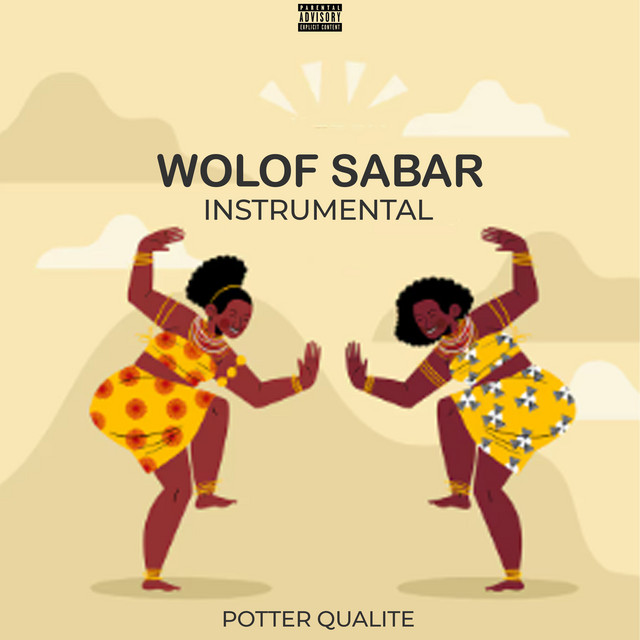
Sabar drum bodies are traditionally carved from Zimbabwean jacaranda; the goatskin head is softened in seawater and pegged only at the top edge, giving the drums their distinctive high-pitched crack. Wolof society historically half-secluded the géwël caste from ordinary life — musicianship was a professional inheritance, not an open avocation. Doudou N'Diaye Rose's extended family includes numerous sabar drummers, and the 'Rose ensemble' is the largest continuously active sabar group in Dakar. Sabar performance is inseparable from the female dancer traditions of the Dakar suburbs; dancers goad drummers as much as drummers cue dancers.
Notable artists
- Doudou N'Diaye Rose
- Mansour Seck
- Aida N'Diaye Rose
- Latyr Sy
Notable tracks
- Doudou N'Diaye Rose — Bakalama (1998)
 Doudou N'Diaye Rose — Djabote (1994)
- Doudou N'Diaye Rose — Sabar Wolof (2004)
- Mansour Seck — N'Der Fouta Tooro Vol. 1 (1994)
Later notable tracks
- Aida N'Diaye Rose — Les Rosettes (2010)
- Latyr Sy — Sabar Nihon (2010)