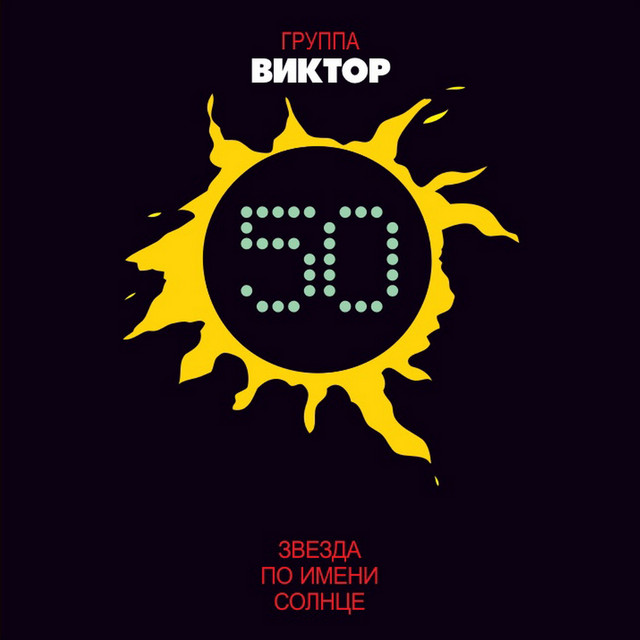
Russian Rock Underground
The Soviet-era rock movement that grew around Leningrad Rock Club (opened 1981): Kino, Aquarium, DDT, Nautilus Pompilius, Alisa.
What it sounds like
Russian rock underground is the whole late-Soviet rock movement that crystallised around the Leningrad Rock Club, which the KGB permitted in March 1981 as a way to contain rock rather than ban it. The line-up is standard British post-punk — two electric guitars, bass, drums, vocals — but the four leading bands sound completely different: Kino play cold staccato mid-tempo, Aquarium sit in an English folk-rock place with heavy Russian-literary lyrics, DDT are loud declamatory hard rock, Nautilus Pompilius sit in synth-textured lyrical balladry. Recording quality was low because the equipment was unofficial, and that dryness became the sound of the era.
How it came about
The Leningrad Rock Club opened on 3 March 1981 at 13 Rubinshteyna Street, meant as a controlled venue for a music the authorities distrusted; instead it became the incubator. Kino, Aquarium, Alisa, DDT, Zoopark and Auktyon all met and rehearsed there. Kino's frontman Viktor Tsoi (1962-1990, Leningrad-born, of Korean-Russian ancestry) became the icon: his 1986 song 'Peremen! (Change!)' played over the climax of Sergei Solovyov's film Assa (1988) in front of a stadium crowd and turned into the unofficial anthem of perestroika. On 15 August 1990 Tsoi died at 28 in a car crash on a rural Latvian road, and the entire Soviet Union stopped to mourn.
What to listen for
Start with the guitar in Kino's 'Gruppa Krovi'. It is dry, staccato, and refuses to swell. The drums are army-snare hard, the synth pad sits far in the background like fog. Tsoi sings without vibrato, in a chant-like declamation that lets every word land. Compare that to Yuri Shevchuk's shout on DDT's 'Rodina', Boris Grebenshchikov's ironic tenor on Aquarium's 'Rok-n-Roll Myortv', and Butusov's floating vocal above the synth pad on Nautilus Pompilius' 'Ya Khochu Byt' S Toboy'. The four contrasting vocal approaches are what stops this scene from being monotone.
If you only hear one thing
Kino, 'Gruppa Krovi' (1988) is the single track that packs everything about late-Soviet youth rock into three minutes. Then 'Peremen!' (1986). For DDT, 'Osen' (1991). For Nautilus Pompilius, 'Ya Khochu Byt' S Toboy' (1988). For Aquarium, 'Gorod Zolotoy' (1986). Late-night headphones, or walking a cold winter street.
Trivia
The Tsoi Wall on Old Arbat Street in central Moscow appeared spontaneously in late August 1990 after Tsoi's death and has been continuously written on for thirty-five years; when the authorities have tried to erase it the graffiti has always been rewritten within a day. Tsoi's father Robert was Korean-Russian (Koryo-saram), descended from the Koreans Stalin forcibly resettled in 1937 from the Far East to Central Asia. The biggest Soviet rock star being of Korean ancestry says something about the multi-ethnic reality of the USSR that pure-Russian cultural memory tends to soften.
Notable artists
- Aquarium
- Boris Grebenshchikov
- DDT
- Yuri Shevchuk
- Kino
- Viktor Tsoi
- Nautilus Pompilius
- Alisa
- Konstantin Kinchev
- Chaif
Notable tracks
- Aquarium — Gorod Zolotoy (1986)
- Kino — Peremen! (1986)
- Nautilus Pompilius — Skovannye Odnoy Tsepyu (1986)
- Kino — Gruppa Krovi (1988)
- Nautilus Pompilius — Ya Khochu Byt' S Toboy (1988)
- Kino — Kukushka (1990)
- DDT — Osen (1991)
- DDT — Rodina (1992)
- Kino — Zvezda po imeni Solntse (1989)
- Nautilus Pompilius — Krylya (1997)
 Alisa — Moe Pokolenie (1987)
- DDT — Chto Takoe Osen (1992)
- Aquarium — Rok-n-Roll Myortv (1984)