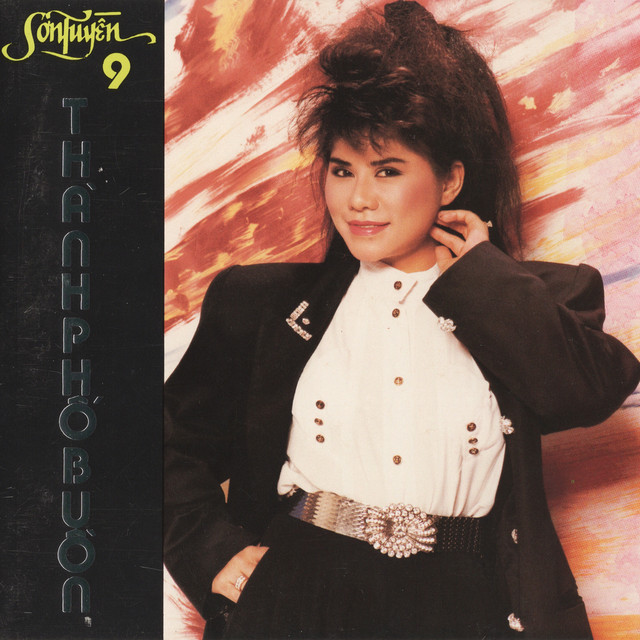
Nhạc Vàng
Sentimental South Vietnamese ballad music built on the bolero rhythm — the everyday people's music of sorrow, banned in the North after 1975.
What it sounds like
Nhạc vàng is a sentimental South Vietnamese ballad style sung over a slow bolero or rumba rhythm. Its hallmark is a nasal, ornamented vocal delivery full of sighs and slides, backed by guitar, electric guitar and later synthesizers. The lyrics, in plain everyday language, speak of parting, poverty, a soldier's fate and unrequited love.
How it came about
The style spread across the South, centered on Saigon, after the 1954 partition of Vietnam. The name 'nhạc vàng' ('yellow music') marked it as decadent, sentimental popular music; composers like Trúc Phương, the 'king of bolero,' produced it in great quantity. After reunification in 1975 the northern government banned it as decadent, but people kept listening underground, and the diaspora preserved it abroad.
What to listen for
Follow the slow, triplet-feel bolero pulse and the singer's heavy use of vocal ornaments and breathy phrasing. The point of the genre is not polish but how everyday sorrow is rendered through the voice.
If you only hear one thing
Chế Linh's 'Thành Phố Buồn' (1970) is a signature recording and a clear example of the genre's aching, ornamented vocal style.
Trivia
The 'yellow' of 'yellow music' was set against the revolutionary 'red' — the genre's name is the deliberate opposite of the North's 'red music' (nhạc đỏ).
Notable artists
- Trúc Phương
- Thanh Tuyền
- Chế Linh
Notable tracks
- Chế Linh — Nửa Đêm Ngoài Phố (1962)
- Chế Linh — Thành Phố Buồn (1970)
- Thanh Tuyền — Mưa Nửa Đêm (1965)